.svg)

Key takeaways
- The cost responsibilities for both landlords and tenants are outlined in the commercial lease.
- This clear cost allocation prevents disputes and aids forecasting.
- It is important to distinguish between OpEx (operational costs) and CapEx (capital investment).
- An expert property manager like Aegis tracks assets, budgets CapEx, ensures fair charges, cuts conflicts and protects profits.
Commercial leases are far more complex than residential ones, often leaving landlords and tenants confused over responsibilities.
Repairs and maintenance disputes rank among the most common sources of friction, potentially escalating into costly legal battles.
Understanding who pays for what - through clear cost allocation - is essential for accurate financial forecasting, smoother tenant relationships and fewer conflicts.
In this post, we'll break down the key clauses and strategies to protect your investments.
What Does Your Lease Say?
No two commercial leases are alike; your lease is the definitive guide that sets out who is responsible for repairs and maintenance. Every cost, liability and obligation should be clearly detailed.
Commercial property owners should pay close attention to lease clauses covering structural repairs (e.g., roof & foundations), common areas (e.g., parking, landscaping & HVAC systems) and tenant-specific maintenance (including interior fit-outs).
A typical commercial lease will outline the following:
-
Premises Maintenance: Tenants are usually responsible for maintaining the premises, including interior cleaning, lighting and non-structural repairs, while landlords cover core major base building systems unless damage is caused by the tenant. Examples of this include air conditioning, power & water.
-
Common Areas: Landlords generally maintain shared spaces such as lobbies, amenities, end-of-trip facilities, elevators and landscaping, with costs recovered through the outgoings that tenants pay. Sometimes, tenants who are the sole occupants of a building prefer to coordinate this service directly.
-
Structural Elements: Landlords are responsible for core structural components, including the roof, exterior walls and foundations.
-
Utilities and Services: Tenants typically pay for their utility usage, while landlords ensure the necessary infrastructure is in working order. That includes the use of water, power, and telecommunications.
-
Indemnity and Insurance: Both parties must hold appropriate indemnity and insurance to protect against losses caused by negligence.
Always review your specific lease and seek legal advice to confirm your liabilities. Aegis Property Management can go through your lease to ensure you understand every term.
What is OpEx (Operating Expense)?
It is important that landlords understand the difference between CapEx (being capital expenditure items) and OpEx (being operating expenditure items)
OpEx refers to the day-to-day costs of running a commercial property, which are typically passed on to tenants through their outgoings payments.
These recurring, short-term costs are fully recoverable in the year they occur, which helps landlords with cash flow and tax planning. In most leases, landlords recover OpEx through CAM (Common Area Maintenance) charges, which helps maintain property operations without major capital outlays.
Examples of OpEx include utilities (electricity, water), property taxes, insurance premiums, cleaning services and property management fee.
What is CapEx (Capital Expenditure)?
Capital expenditure (CapEx) refers to major base building items such as roof replacements, full HVAC installations, structural repairs, car park resurfacing, major renovations and elevator overhauls. These items do not relate to the lease and are solely funded by the Owner.
Confusing OpEx and CapEx can skew cash flow through tax and budgeting errors. This can accelerate deductions while inflating short-term expenses, which can strain liquidity.
Failing to invest in CapEx altogether leads to deferred maintenance, higher future OpEx from breakdowns, and a gradual decline in property value.
H3: Repairs vs Maintenance vs Capital Replacement
Clearly distinguishing between repairs, maintenance and capital replacements is essential for effective lease compliance and cost management in commercial properties.
This table helps to clarify responsibilities:
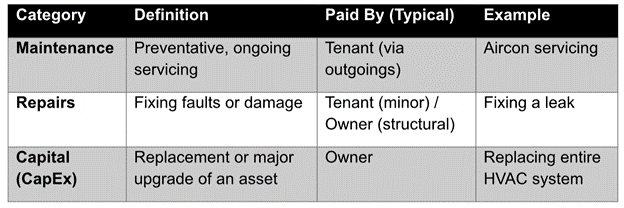
Repairs restore functionality without improvement or replacement (OpEx), maintenance prevents failures, whilst CapEx generally relates to replacement or significant refurbishment/upgrade. Getting this balance right helps optimise cash flow and reduce disputes.
Real-World Example
Consider a standard air conditioning unit in a commercial office. The tenant generally covers routine servicing, filter changes and minor repairs through outgoings, which qualify as operating expenses.
When the unit reaches the end of its life and a full replacement is needed, it becomes a capital expenditure typically paid for by the owner.
Why Property Management Matters
Expert property management safeguards your commercial investment by carefully tracking the lifecycle of facilities and equipment.
This ensures accurate budgeting for future capital expenditures (CapEx) and prevents cash flow shocks from unexpected replacements. Property managers also ensure that tenants are only charged for allowable outgoings, reducing the risk of disputes.
Proactive communication and clear documentation further minimise conflict, strengthen relationships and safeguard your bottom line. Partnering with professionals like Aegis Property Management turns potential complications into efficient, well-managed operations.
In short, effective property management and regular lease reviews ensure fair costs, strong assets and fewer surprises.
Contact Aegis Property Management today for expert advice and market insight tailored to your area.
Contact us today for a free property management consultation